

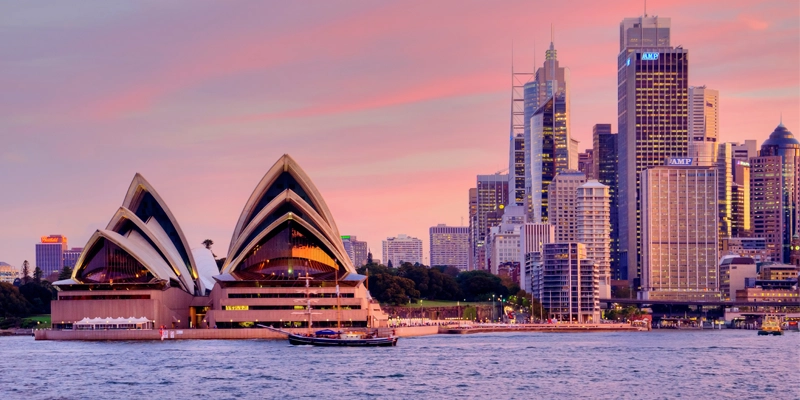
Sydney is Australia’s largest and most well-known city, home to the Opera House, the Harbour Bridge, and some of the country’s most famous beaches. It’s also the capital of New South Wales, the nation’s most populous state, with roughly 8 million residents statewide. If a move to Sydney is on the table, this guide walks through the practical details, housing, cost of living, jobs, transport, and lifestyle, to help you plan properly before you commit.
Why People Are Moving to Sydney
Sydney draws people for a mix of career opportunity and lifestyle. It’s Australia’s financial and corporate centre, home to the Australian Securities Exchange and the local headquarters of many international companies, with particularly strong sectors in finance, technology, and professional services. At the same time, it offers a genuinely outdoor-oriented lifestyle, beaches, harbourside walks, and national parks are all within easy reach of the CBD, which is part of why the city consistently rates well for quality of life despite its high cost of living.
Understanding Sydney’s Regions
Greater Sydney is large and varied, and knowing the rough shape of the city helps before you start suburb-hunting:
- Inner Sydney — the CBD and immediately surrounding suburbs like Surry Hills, Darlinghurst, and Paddington; central, walkable, and priced accordingly
- Eastern Suburbs — beach-focused, including Bondi and Coogee, blending laid-back coastal life with higher-end housing
- Northern Sydney — the North Shore and Northern Beaches, known for leafy streets, national parks, and beaches stretching up to Palm Beach
- Western Sydney — one of the fastest-growing parts of the city, culturally diverse, with major commercial and industrial precincts
- Southern Sydney — a mix of coastline and quieter suburban living around areas like Cronulla and the Sutherland Shire
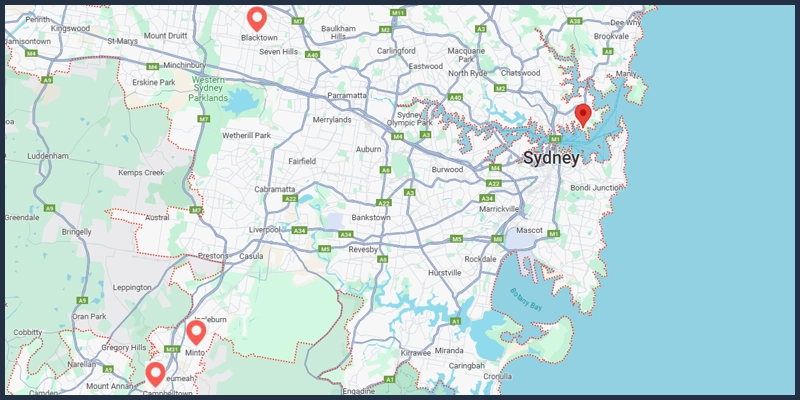
- Greater Western Sydney — includes Parramatta, Blacktown, and Penrith, offering a more affordable entry point with a longer commute
Beyond the metro area, the Blue Mountains, Southern Highlands, Central Coast, and Illawarra region are all popular for people wanting a quieter pace within a reasonable drive of the city.
Sydney’s Weather, Season by Season
- Spring (Sep-Nov): mild and pleasant, roughly 15-25°C, one of the easier windows to move in
- Summer (Dec-Feb): warm to hot, 20-30°C and sometimes higher, humid, with occasional storms, pack light, breathable clothing
- Autumn (Mar-May): mild, 14-22°C, but also the wettest stretch of the year, with March typically the rainiest month
- Winter (Jun-Aug): mild by international standards, 8-17°C, no snow in the city but cooler nights
If you have flexibility on timing, spring tends to offer the best balance of comfortable weather and lower rainfall risk for moving day.
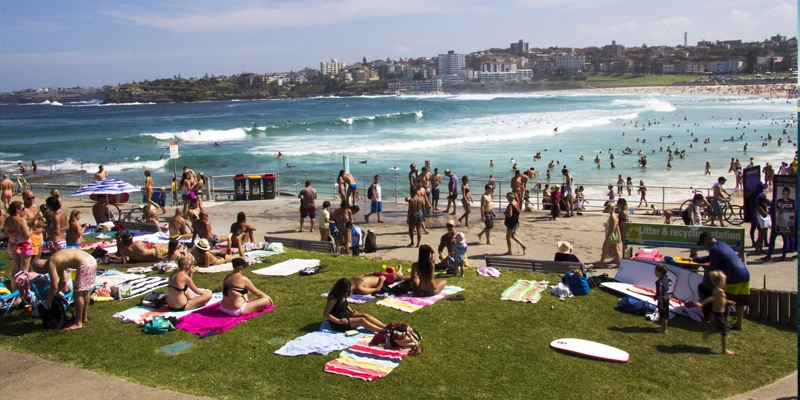
Summertime at North Bondi Beach, New South Wales
Housing When Moving to Sydney: What It Actually Costs
Sydney is consistently one of the most expensive housing markets in Australia, but the gap between suburbs is enormous. As a general reference point, the citywide median house price has sat above $1.5 million, but that figure hides huge variation, Eastern Suburbs and Inner Sydney properties can run well above $2 million, while parts of Western Sydney (Parramatta, Blacktown, Penrith) and Greater Western Sydney (Liverpool, Castle Hill) offer considerably more accessible entry points, often under $1.1 million.
Rent shows the same pattern. Citywide, median weekly rent for houses has typically sat around $700-720, with units somewhat lower. Northern beachside suburbs like Manly and Mosman command a significant premium, sometimes $1,600-1,900 a week for a house, while Western Sydney suburbs like Parramatta and Penrith are considerably cheaper, often in the $500-600 range. For the most budget-conscious options, outer suburbs like Blacktown, Campbelltown, and Liverpool tend to offer the lowest rents relative to the city average, generally trading affordability for a longer commute.
Whether to rent or buy comes down to your finances and timeline. Buying builds equity but adds stamp duty, legal fees, and exposure to interest rate movement; renting is more flexible and avoids those upfront costs but doesn’t build ownership.
Cost of Living Beyond Rent
Groceries, utilities, and transport all add up on top of housing. As a rough guide, everyday grocery items (milk, bread, eggs, coffee) run somewhat higher than the national average, electricity typically costs in the range of $130-140 a month for a small household, and unlimited-data NBN plans start around $75-100 a month depending on speed. On transport, an Opal card daily travel cap keeps public transport costs predictable, generally under $20 a day regardless of how many trips you take.
Finding Work After Moving to Sydney
Sydney is Australia’s largest and most diverse economy. Over the past decade, ABS data shows a clear shift toward managerial and professional roles, growth in finance, technology, and professional services, while more traditional clerical, trades, and retail roles have declined somewhat, partly due to automation and changing consumer habits. Healthcare and education have remained stable, steady employers. If you’re relocating for a specific industry, it’s worth researching which part of the city that industry actually clusters in, tech and finance skew toward the CBD and North Sydney, while healthcare and education opportunities are spread more evenly across the metro area.
Education and Healthcare
Sydney has a full range of educational options, from public and Catholic schools through to selective high schools and prestigious private institutions. Selective schools like James Ruse Agricultural High School and Baulkham Hills High School are well known for strong HSC results, though entry is competitive and academically focused. For tertiary education, the University of Sydney and the University of New South Wales are both globally ranked, alongside a strong TAFE NSW vocational training network.
On healthcare, Sydney runs a strong mix of public hospitals (Royal Prince Alfred, Westmead) and private options (St Vincent’s, Mater Hospital), backed by leading medical research institutions like the Garvan Institute. Public healthcare through Medicare covers the essentials; private health insurance is worth considering if you want shorter wait times for elective procedures.
Getting Around After Moving to Sydney
Public transport runs on the Opal card system, covering trains, buses, ferries, light rail, and the driverless Sydney Metro. Coverage is strong across the inner and middle suburbs but thins out further from the CBD, where a car becomes more necessary. If you’re moving from interstate, an existing Australian driver’s licence is valid in NSW for a limited period after you arrive, after that window, you’ll need to convert it to a NSW licence through Service NSW.
For interstate connections, Sydney Kingsford Smith Airport sits close to the city and handles the bulk of domestic and international flights. By road, Melbourne is roughly 9-10 hours via the Hume Highway, Brisbane around 10-11 hours via the Pacific Highway, and Canberra a much shorter 3-4 hour drive.
Sydney’s Lifestyle and Culture
Sydney’s lifestyle leans heavily outdoors, beach culture, harbourside walks, and a strong emphasis on work-life balance alongside a genuinely fast-paced corporate scene. The city’s cultural calendar is busy year-round: Sydney Festival in January, Vivid Sydney’s light and music festival around May-June, and New Year’s Eve fireworks over the Harbour Bridge that draw global attention. Food and dining are genuinely diverse, reflecting the city’s multicultural population.
Practical Tips Before Moving to Sydney
- Research suburbs properly, Sydney’s price range is wide enough that a 20-minute difference in commute can mean a very different budget
- Move during spring where possible, avoiding peak events like New Year’s Eve or major school holiday periods
- If relocating from interstate, plan to convert your driver’s licence to NSW within the required window after arrival
- If you have school-age children, check catchment zones and enrolment requirements early, selective schools especially require lead time
- Update your address with banks, utilities, and government services as early as possible in the move
Final Thoughts on Moving to Sydney
Sydney is expensive relative to most of the rest of Australia, but it offers a genuinely broad mix of career opportunity, lifestyle, and access to both city and coastline that few other Australian cities can match. The suburb you choose will shape your day-to-day experience more than almost any other decision, it’s worth spending real time comparing commute, budget, and lifestyle fit before settling on where to land.