


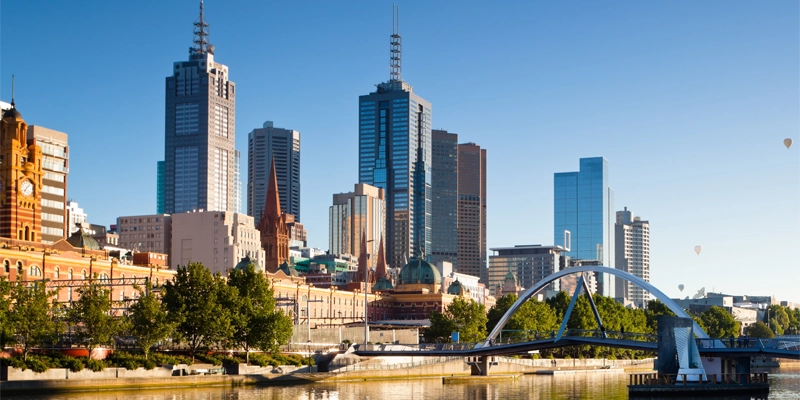
Melbourne is Victoria’s capital and Australia’s second-largest city, known for its laneway culture, coffee scene, and famously changeable weather. It’s also one of the most multicultural cities in the country, roughly 40% of residents were born overseas, and over 200 languages are spoken across its suburbs. If you’re considering a move, here’s a practical rundown of what to expect.
Why People Are Moving to Melbourne
Melbourne consistently ranks among the world’s most liveable cities, and a few things drive that reputation:
- A genuinely diverse, multicultural population and food scene
- Strong universities (University of Melbourne, Monash, RMIT) drawing students and academics globally
- A diversified economy spanning finance, technology, healthcare, and education
- A packed events calendar, the Australian Open, the Melbourne Cup, and the F1 Australian Grand Prix all call it home
- Well-developed public transport, including one of the world’s largest tram networks
Housing: What It Costs to Live in Melbourne
Melbourne’s housing market varies enormously by location. As a rough reference point, the citywide median house price has sat around the $930,000 mark, though this shifts by suburb, inner-city areas like Fitzroy or the eastern suburbs of Blackburn and Box Hill can run well above $1.4 million, while western suburbs like Footscray and Werribee sit considerably lower, and regional centres like Bendigo or Ballarat lower again.
Rent follows a similar pattern. A three-bedroom house across the city has typically rented in the $530-650 per week range, with outer-growth suburbs like Craigieburn, Tarneit, Point Cook, and Officer offering the most affordable options, usually because they’re a longer commute from the CBD.
Whether renting or buying makes more sense depends on your finances and how long you plan to stay. Buying builds equity but comes with stamp duty, legal costs, and exposure to interest rate changes. Renting is more flexible and avoids those upfront costs, but doesn’t build ownership over time.
Melbourne’s Weather — What to Actually Expect
Melbourne’s weather has a reputation for changing quickly, sometimes within the same day. Broadly:
- Spring (Sep-Nov): mild, 9-20°C, generally the easiest season to move in
- Summer (Dec-Feb): warm to hot, averaging around 25°C but capable of hitting 40°C, with cooler evenings near the bay
- Autumn (Mar-May): mild and often considered the most pleasant season, 10-20°C
- Winter (Jun-Aug): cool and often overcast, 6-14°C, with more frequent rain
Spring and autumn are generally the easiest windows for relocating, both for weather and for avoiding the city’s busiest event periods.

Autumn in The Dandenong Ranges, Melbourne
Getting Around
Melbourne’s public transport runs on the myki card system, covering trains, trams, and buses. The tram network in particular is one of the largest in the world and covers most of the inner and middle suburbs well. Outside the tram network’s reach, a car becomes far more necessary, worth factoring in if you’re looking at outer suburbs.
For interstate travel, Melbourne is well connected: about 1.5 hours by air from Sydney, roughly 2.5 hours from Brisbane, and just over an hour from Adelaide. Melbourne Airport (Tullamarine) handles most international and domestic flights, with Avalon Airport offering a smaller domestic alternative.
Finding Work After Moving to Melbourne
Melbourne’s job market spans several strong sectors: healthcare (the largest employer in Victoria), technology and IT, finance, education, hospitality, construction, and a growing retail/e-commerce sector. Which suburb you settle in can matter for your commute depending on your industry, many tech and finance roles cluster in and around the CBD, while healthcare and education opportunities are spread more broadly across the metro area.
Choosing a Suburb
Melbourne’s suburbs each have a distinct identity:
- Inner Melbourne (Fitzroy, Carlton, Richmond) — closest to the action, higher price point
- Eastern suburbs (Blackburn, Box Hill, Toorak) — leafy, family-friendly, generally more expensive
- Western suburbs (Footscray, Werribee) — more affordable, increasingly popular with young families
- Northern suburbs (Brunswick, Coburg) — known for music venues, galleries, and a younger crowd
- Southern suburbs (Brighton, South Yarra) — beach lifestyle and upscale shopping
- Outer growth corridors (Craigieburn, Tarneit, Point Cook, Officer) — most affordable, longer commute
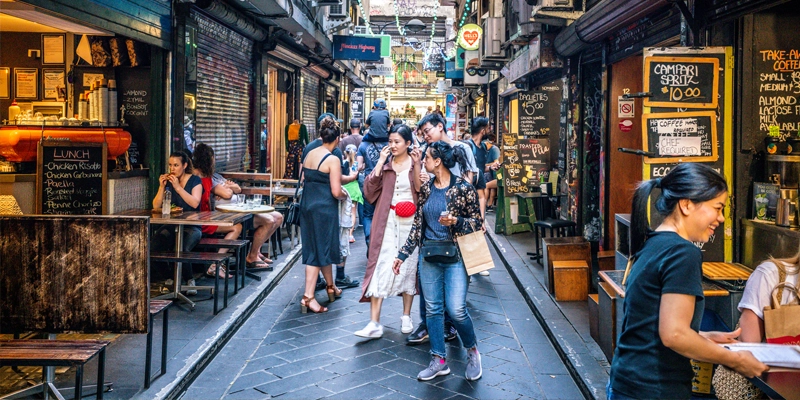
Centre place iconic laneway, Melbourne
Practical Tips Before Moving to Melbourne
- Move during spring or autumn where possible, mild weather and fewer major events competing for accommodation and transport
- Avoid moving during major events like the Australian Open or Melbourne Cup, when the city is busiest
- If you have school-age children, research schools and enrolment requirements early, some schools have zone restrictions or require interviews
- Factor commute time into your suburb choice, not just the price difference
- Keep essential documents (ID, medical records, school transcripts) easily accessible during the move
Final Thoughts on Moving to Melbourne
Melbourne offers a genuinely diverse, culturally rich lifestyle with strong job prospects across multiple industries, but it comes at a higher cost of living than several other Australian capitals. The suburb you choose will shape your experience more than almost any other decision, so it’s worth weighing commute time, lifestyle, and budget together rather than focusing on price alone.