
Moving heavy furniture can be one of the most challenging parts of relocating your home or office. Large sofas, dining tables, wardrobes, dressers and bed frames can be difficult to lift, manoeuvre through narrow spaces and transport without causing damage.
Without the right preparation, moving a heavy item can lead to scratched floors, damaged furniture, marks on walls or unnecessary physical strain.
The solution is not simply to use more strength. Successful furniture moving depends on planning the route, assessing the load, using suitable equipment and knowing when additional help is needed.
Whether you’re rearranging a room, moving house or arranging furniture transportation across Melbourne, understanding the correct preparation and handling techniques can make the process more manageable.
In this guide, Moving With Sam covers how to move heavy furniture safely, including practical moving tips, essential equipment, floor protection, safe lifting considerations and situations where professional movers may be the better option.
How to Move Heavy Furniture Without Hurting Yourself
Before moving a sofa, wardrobe, cabinet or another bulky item, assess the furniture and the environment around it.
Consider how heavy the item is, whether it can be dismantled, how easily you can grip it and whether the planned route contains stairs, tight corners or other obstacles.
A piece of furniture that appears manageable in an open room can become difficult to handle when you need to turn it through a narrow doorway.
Before beginning, make sure you have:
- A clear route from the furniture’s current location to the vehicle.
- Accurate measurements of the furniture and access points.
- Enough assistance for the item’s size and weight.
- Suitable moving equipment for the surface and load.
- Protective materials to reduce scratches and impact damage.
- A suitable vehicle and a plan for securing the furniture.
Never attempt to move an item that you cannot safely lift, control or manoeuvre. Good planning and suitable mechanical aids can reduce manual handling demands, but professional assistance may still be necessary for particularly heavy or awkward items.
1. Prepare Before Moving Heavy Furniture
Preparation helps prevent unnecessary lifting, repeated movements and last-minute problems.
Measure doorways, hallways and staircases
Measure the height, width and depth of the furniture at its widest points. Then measure the doorways, hallways, staircases, lift entrances and tight turns along the route.
Remember to account for door handles, railings, skirting boards and other features that can reduce the available clearance.
For items such as sectional sofas, wardrobes and large dining tables, check whether removable components will make the move easier.
Do not assume that turning furniture sideways will automatically allow it to fit. The shape of the item and the available turning space matter just as much as the doorway’s dimensions.
Plan the route before you move heavy furniture
Walk the route before moving anything.
Remove loose rugs, cables, boxes, small furniture and other obstacles. Make sure stairs are clear, lighting is adequate and doors can remain open where needed.
Also consider where the vehicle will be parked. A clear route through the house is not enough if the furniture then needs to be carried across a long distance or through an uneven outdoor area.
Planning the full route helps reduce unnecessary handling and makes it easier to identify problems before the furniture is lifted.
Empty and dismantle furniture where appropriate
Remove loose contents from drawers, cabinets and shelves before moving them. Take off detachable shelves, cushions, legs or other components where the furniture is designed to be dismantled.
For beds, large tables and sectional sofas, check the manufacturer’s instructions before removing parts.
Keep screws, bolts and fittings together in a clearly labelled bag or container so that reassembly is easier at the destination.
Reducing unnecessary weight and removing loose components can make furniture easier to handle and help prevent items from shifting during transportation.
2. Use the Right Heavy Furniture Moving Equipment
Appropriate equipment can reduce the amount of manual handling required and make it easier to control bulky furniture.
The equipment you need depends on the item’s size, weight, shape, route and floor surface.
Furniture sliders for heavy items
Furniture sliders are placed underneath suitable furniture to help move it across a floor with less friction.
Choose sliders designed for the relevant surface. Felt sliders may be suitable for some hard floors, while other materials are designed for carpet.
Check that the sliders are positioned correctly and that the furniture remains stable before moving it.
Sliders are generally most useful for repositioning suitable items across relatively flat surfaces. They are not a replacement for lifting equipment when an item needs to be carried down stairs or raised over an obstacle.
Furniture dollies for heavy pieces
A furniture dolly is a low platform with wheels that can help transport suitable heavy items across a flat surface.
Before using one, check its rated capacity and make sure the furniture is centred and stable. The load should not overhang in a way that could cause it to tip.
Move at a controlled pace and avoid sudden turns or uneven surfaces that could destabilise the furniture.
Hand trucks and moving trolleys
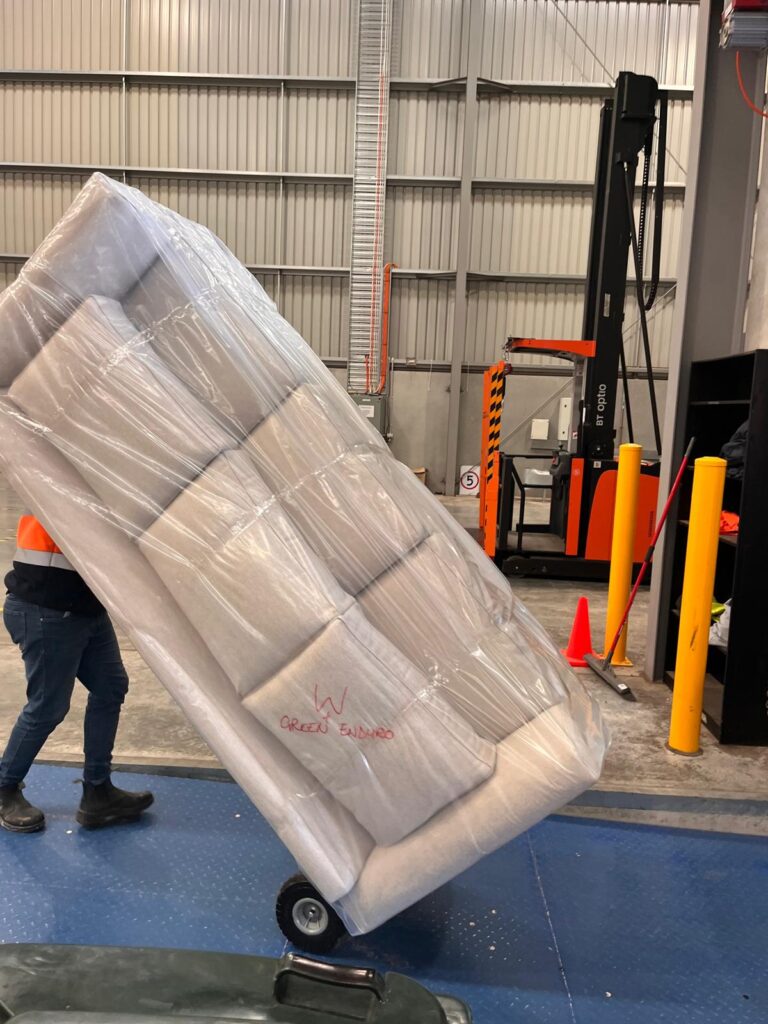
A hand truck or suitable moving trolley can help transport certain bulky items.
The item’s shape and weight must be compatible with the equipment. Secure the load as recommended by the manufacturer, and avoid using a trolley on stairs or uneven ground unless it is specifically designed for that purpose and operated correctly.
Moving straps
Moving straps may assist with handling suitable items, but they need to be used according to the manufacturer’s instructions.
Straps do not eliminate the risk associated with a heavy or awkward load. If the item cannot be controlled comfortably and safely, use another method or seek professional assistance.
Moving blankets and protective padding
Moving blankets help cushion furniture against bumps, scratches and surface contact during handling and transportation.
They are particularly useful for sofas, timber furniture, cabinets, tables and other items with finished surfaces.
Secure protective materials so they do not slip and create a hazard while the furniture is being moved.
3. Follow Safer Lifting and Handling Techniques
Moving heavy furniture requires control, coordination and an understanding of your limits.
Poorly planned lifting, awkward reaching and twisting while carrying a load can increase the risk of injury.
Keep the load manageable
Before lifting, determine whether the furniture can be moved with the available assistance and equipment.
Where appropriate, use a trolley, dolly or other suitable mechanical aid instead of carrying the full weight manually.
Do not assume that having another person present automatically makes a heavy lift safe. Both people must be able to control the item, and the route must provide enough room to manoeuvre.
Maintain a controlled posture
When a manual lift is appropriate, get close to the item, keep it as close to your body as practical and use a stable stance.
Avoid sudden movements, excessive reaching and twisting your torso while carrying the furniture. If you need to change direction, reposition your feet rather than rotating your body under load.
These techniques can help, but posture alone does not make an unsafe lift safe. The weight, grip, shape and environment must also be considered.
Coordinate with the other person
When two people move a bulky item, agree on the route and who will communicate instructions.
Use clear signals before lifting, turning, stopping or lowering the furniture. If either person loses a secure grip or needs to stop, communicate immediately.
If the furniture cannot be manoeuvred safely with the available people and equipment, do not force the move.
Moving tall, heavy furniture
Tall cabinets, wardrobes and dressers can be difficult to balance because of their height and shape.
Empty them first, secure any remaining movable components and check whether they should be dismantled before transportation.
Avoid tipping a tall item into an unstable position. Some furniture may need specialised equipment or professional handling to move safely through doorways or stairs.
4. Protect Floors, Walls and Door Frames
Furniture can damage a property even when the item itself remains in good condition.
Timber floors can scratch, tiles can chip and painted walls or door frames can be marked when large items are manoeuvred through tight spaces.
A few precautions can help reduce these risks.
Choose appropriate floor protection
Use furniture sliders designed for the floor surface when moving suitable items across flat areas.
For high-traffic routes, protective floor runners or other appropriate coverings may help prevent scratches and scuffs.
Make sure floor coverings do not move, bunch up or become trip hazards while people are carrying furniture.
Protect corners and narrow spaces
Identify tight turns and narrow openings before starting.
Where practical, protect vulnerable door frames, banisters and nearby surfaces with suitable padding. Moving blankets can also help protect furniture finishes when used correctly.
Avoid dragging furniture across the floor without suitable equipment, and never assume that a protective covering will prevent damage if the item is forced against a wall or doorway.
Moving heavy furniture on stairs
Staircases present additional challenges because the furniture must be controlled while the people handling it move through a limited space.
Before moving furniture upstairs or downstairs, assess the item, staircase width, landings, turning points and available equipment.
If the item is too heavy or awkward to control safely, use a professional furniture moving service rather than attempting a difficult lift.
5. Load and Transport Furniture Properly
Moving furniture safely does not end when the item reaches the vehicle.
Furniture needs to be positioned and secured so it does not shift during transportation.
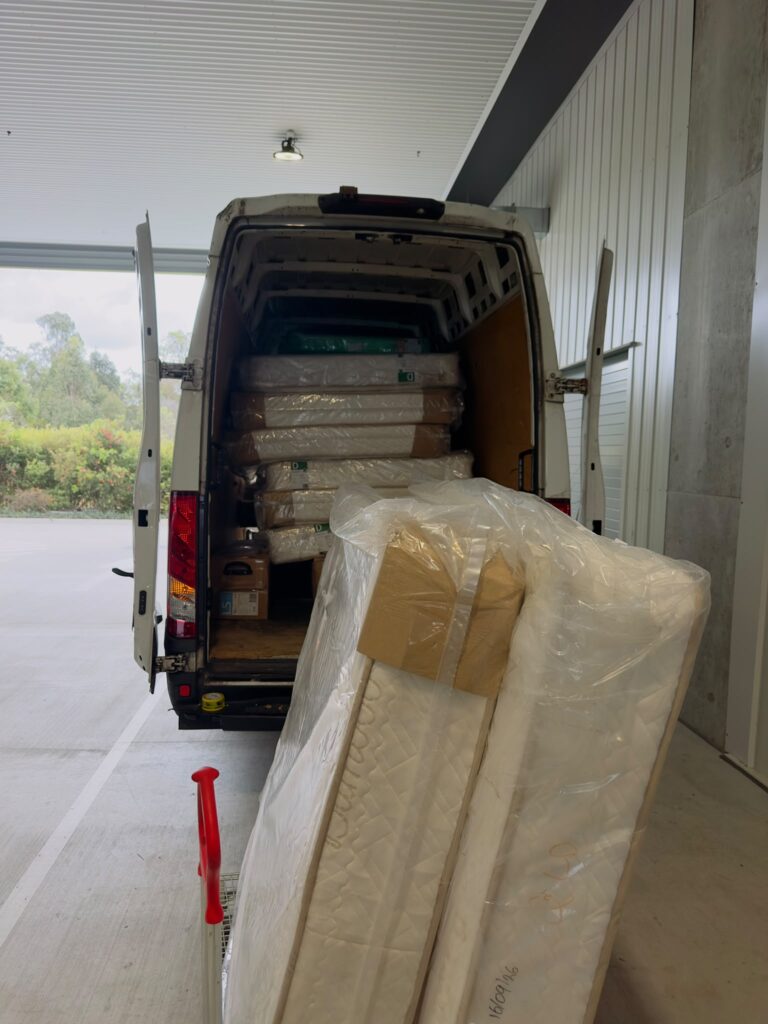
Before loading, check that the vehicle has sufficient cargo space and a suitable loading access point. Protect finished surfaces with appropriate blankets or padding, and arrange items to reduce contact and movement.
During loading and transportation:
- Use suitable loading equipment where required.
- Protect furniture corners and vulnerable surfaces.
- Keep heavy or unstable items from falling onto other cargo.
- Use appropriate restraints attached to suitable anchor points.
- Check that the load remains stable.
- Make sure doors, visibility and vehicle operation are not obstructed.
Do not rely on friction or the furniture’s weight alone to keep it in position.
The method of loading will depend on the furniture, vehicle and route. Large sofas, wardrobes, mattresses and cabinets may need different positioning and protection.
For interstate moves, careful loading and restraint are particularly important because the furniture may experience hours of road travel.
6. Handle Different Types of Furniture Carefully
Different furniture pieces create different handling challenges.
Understanding their construction can help you choose an appropriate moving method.
Sofas and sectional lounges
Sofas can be awkward because of their length, depth and upholstered surfaces.
Remove cushions and detachable legs where appropriate, protect the fabric and check whether a sectional lounge can be separated into smaller components.
Before moving it, measure doorways and corners to determine whether the sofa can pass through without being forced or excessively bent.
Wardrobes and dressers
Empty drawers and remove detachable shelves where practical.
Secure doors and drawers so they do not open unexpectedly during handling. Large or tall items may require dismantling or specialist moving equipment.
Avoid lifting a dresser by weak components such as drawer handles or decorative trim.
Beds and bed frames
Remove bedding and mattresses, and dismantle the frame when recommended by the manufacturer.
Keep all fittings together in a labelled container. Protect exposed edges and ensure the frame components are stable during transportation.
Dining tables
Remove loose items and detachable legs where practical and permitted by the furniture’s design.
Protect the tabletop with suitable padding, taking particular care with glass, stone or other fragile surfaces.
Glass tabletops and similar components may require separate handling and specific protective packaging.
Cabinets and shelving units
Remove loose contents and detachable shelves before moving.
Check for fragile components, glass doors and protruding hardware. If the unit is tall or unstable, assess whether it should be dismantled rather than moved as one piece.
7. Avoid Common Heavy Furniture Moving Mistakes
Even a relatively short move can become difficult when furniture is poorly prepared.
Here are some mistakes to avoid.
Moving without measuring: Furniture can become stuck in doorways or tight corners, causing delays and damage.
Trying to lift too much: An item that cannot be safely controlled should not be moved using strength alone.
Skipping protective materials: Unprotected finishes can be scratched, scuffed or dented during handling and transportation.
Using unsuitable equipment: A trolley that is not rated for the load or the surface can create additional hazards.
Forgetting to empty furniture: Contents may shift, fall or add unnecessary weight during the move.
Failing to secure items in the vehicle: Unrestrained furniture can move during braking or turning.
Rushing the process: Hurrying makes it harder to coordinate movements and identify problems.
Ignoring manufacturer’s instructions: Certain items require specific dismantling, positioning or handling methods.
Taking the time to prepare properly can make furniture transportation more organised and reduce unnecessary risks.
8. When Should You Hire Professional Furniture Movers?
Some furniture moves can be managed with suitable preparation and equipment. Others are better handled by experienced professionals.
Consider professional furniture movers when:
- The item is too heavy or awkward to control safely.
- You need to move furniture across multiple flights of stairs.
- The route contains narrow hallways or difficult corners.
- The furniture is fragile, valuable or unusually shaped.
- You need suitable transport equipment or a larger vehicle.
- Several bulky items need to be moved together.
- You are relocating a home or office on a tight schedule.
- You do not have enough help for the task.
Professional movers can assess the item, access route and transportation requirements before the move.
When requesting a quote, provide details about the furniture, pickup and delivery locations, stairs, parking, lift access and any special handling needs.
This helps the provider understand the job and determine a suitable approach.
Benefits of Professional Furniture Transportation
Professional furniture transportation can simplify the process when a move involves several items or difficult access.
Depending on the service booked, assistance may include handling, protective materials, loading and transportation using an appropriate vehicle.
Professional support can be particularly helpful for people moving large furniture, businesses relocating office equipment or customers purchasing furniture that needs to be collected from one location and delivered to another.
The exact services included vary by provider, so confirm the details before booking.
How Moving With Sam Can Help
Moving heavy furniture safely requires the right preparation, equipment and transportation plan.
Moving With Sam provides moving and furniture delivery services for customers who need help transporting furniture and bulky items.
Whether you’re organising a furniture delivery or planning a larger move, discuss your requirements with the team, including the type of furniture, access conditions and pickup and delivery locations.
Providing these details helps establish what assistance and transportation arrangements may be suitable for your move.
Explore Moving With Sam’s furniture delivery services or visit the Moving With Sam website to learn more.
Final Thoughts
Moving heavy furniture is easier to manage when you plan the job before lifting anything.
Measure the route, clear obstacles, empty and dismantle suitable furniture, select appropriate equipment and protect floors and furniture surfaces. Always assess whether an item can be handled safely with the available people and equipment.
If a piece of furniture is too heavy, awkward or difficult to manoeuvre, professional help may be the safer and more practical option.
Good furniture moving starts with good preparation.
Whether you’re moving a sofa across the room, transporting a wardrobe to a new home or arranging delivery of bulky furniture, careful planning helps protect your belongings and the spaces around them.
Need Help Moving Heavy Furniture?
Moving With Sam provides moving and furniture delivery services for customers transporting furniture and bulky items.
Discuss your furniture, access requirements and destination with our team to explore suitable transportation options.
Let Moving With Sam help keep your furniture moving.
📞 1800 899 726
🌐 movingwithsam.com.au
📩 info@movingwithsam.com.au
Frequently Asked Questions
How do you move heavy furniture safely?
Assess the item’s size and weight, measure the route, clear obstacles and use suitable equipment. Arrange enough assistance and avoid lifting items that cannot be controlled safely.
What equipment is best for moving heavy furniture?
Depending on the task, useful equipment may include furniture sliders, dollies, hand trucks, moving blankets, protective padding and appropriate cargo restraints.
How do you move heavy furniture without scratching floors?
Use suitable furniture sliders or other appropriate moving equipment, protect high-traffic routes and avoid dragging furniture directly across vulnerable surfaces.
How do you move a heavy sofa through a narrow doorway?
Measure the sofa and doorway first, remove detachable components where appropriate and check the turning space. Never force the sofa through an opening; reassess the route or seek professional assistance if necessary.
Should I dismantle furniture before moving it?
Dismantling can reduce weight and make some furniture easier to manoeuvre. Follow the manufacturer’s instructions and keep screws and fittings labelled so reassembly is easier.
How do you protect furniture during transportation?
Use suitable moving blankets or padding, position items carefully and secure the load with appropriate restraints. Keep fragile surfaces away from sharp or heavy objects.
Is it safe to move heavy furniture alone?
Some lighter items may be manageable, but large or awkward furniture can be difficult to control alone. Use suitable equipment and seek help when the item exceeds your safe handling capacity.
When should I hire professional furniture movers?
Professional assistance may be appropriate for very heavy furniture, difficult staircases, tight access, fragile items, multiple bulky pieces or moves that require suitable transportation equipment.
Can Moving With Sam help transport heavy furniture?
Moving With Sam provides moving and furniture delivery services. Contact the team with details of your furniture, pickup location, destination and access requirements to discuss suitable options.