

Moving house or transporting furniture to a new location involves more planning than simply loading everything into a vehicle. Some items require extra care, and your mattress is one of them.
Whether you’re moving a single mattress across Melbourne or relocating your entire household interstate, transporting it incorrectly can expose it to dirt, moisture, tears, deformation and unnecessary handling damage.
Mattresses can also be awkward to carry because of their size, weight and flexibility. Navigating stairs, narrow hallways, doorways and tight vehicle openings can make the process even more challenging.
The good news is that transporting a mattress safely becomes much easier with the right preparation, protective materials and handling techniques.
In this guide, Moving With Sam explains how to prepare, wrap, lift, load and transport a mattress while avoiding common mistakes. We’ll also cover different mattress types, vehicle selection, transportation safety and when professional moving assistance may be worthwhile.
How to Transport a Mattress: A 9-Step Checklist
Before moving your mattress, consider its dimensions, construction, condition and destination. These factors help determine how it should be protected and transported.
Follow these nine steps to prepare for a safer mattress move.
1. Remove Bedding and Prepare the Mattress
Start by removing everything from the mattress.
This includes:
- Bedsheets and fitted sheets
- Blankets and doonas
- Mattress protectors
- Mattress toppers
- Pillows and other bedding
Removing these items reduces unnecessary bulk and prevents clean bedding from becoming dirty during transportation. Once the mattress is uncovered, check its surface for stains, dust, moisture or existing damage. If cleaning is necessary, follow the manufacturer’s care instructions and allow the mattress to dry completely before wrapping it. Avoid soaking the mattress or applying cleaning products that could damage its fabric or internal materials. It is also a good opportunity to inspect the mattress for tears, sagging or damaged seams. Knowing its existing condition can help you identify any changes after the move.
Tip: Keep your clean bedding in a separate, sealed bag so it stays protected during moving day.
2. Measure the Mattress and Clear the Moving Route
A mattress that fits comfortably on a bed may be difficult to manoeuvre through a narrow doorway or staircase. Before lifting it, measure its length, width and thickness. Then check the dimensions of the doorways, hallways, staircases and vehicle openings along the planned route.
Pay particular attention to:
- Tight corners
- Narrow staircases
- Low ceilings
- Door frames
- Lift entrances
- Corridors with limited turning space
- Obstacles around the vehicle
Remove loose items, small furniture, rugs and other obstructions from the pathway. Planning the route beforehand can reduce repeated lifting and awkward manoeuvres. It can also help prevent damage to the mattress, walls, door frames and other household items. If the mattress cannot pass through an opening without excessive bending or force, reassess the route rather than trying to push it through.
3. Choose a Suitable Vehicle and Arrange Enough Help
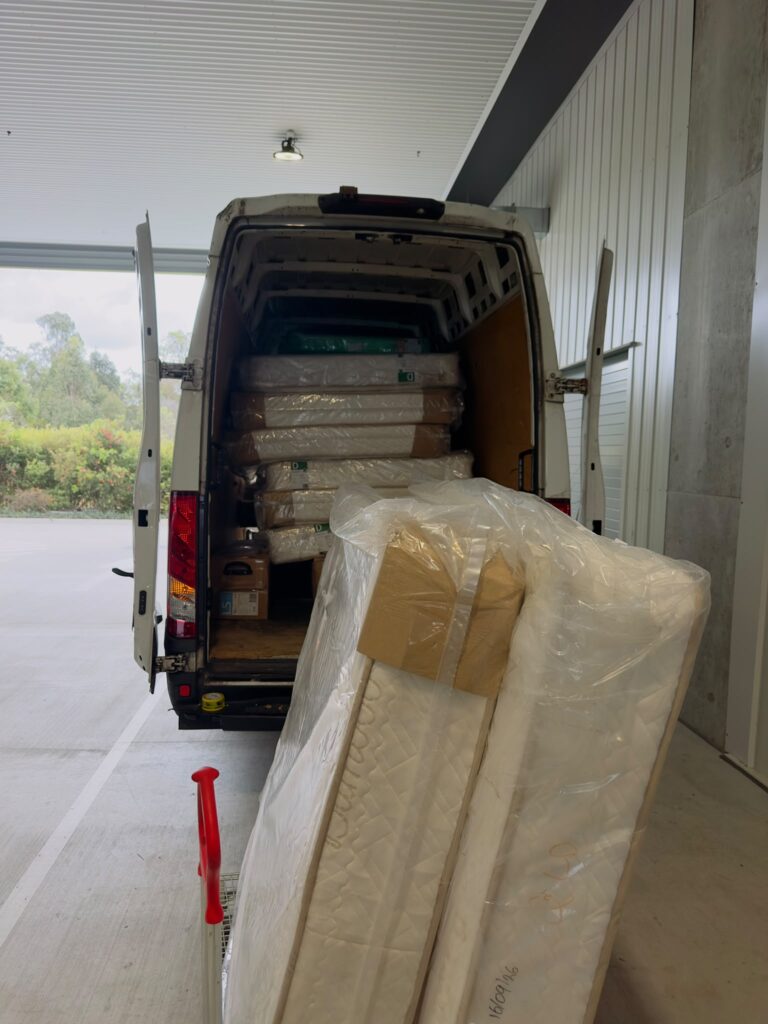
The right vehicle makes a significant difference when transporting a mattress. A mattress may fit inside a van, enclosed moving truck or suitable trailer, depending on its dimensions and the available cargo space.
Before selecting a vehicle, consider:
- Mattress size and thickness
- Interior cargo dimensions
- Door and loading opening dimensions
- Available space for other furniture
- Protection from rain, dust and road debris
- Available securing points
- The distance of the journey
A covered vehicle is generally preferable because it protects the mattress from changing weather and road conditions.
Can you transport a mattress in a ute or car?
Some smaller mattresses may fit in a suitable vehicle, but a queen or king mattress often requires more space than a standard passenger car provides. Transporting a mattress on an open ute tray can expose it to rain, dust and wind. It may also create safety risks if the load extends beyond the vehicle or is inadequately secured. Before using any vehicle, ensure the mattress can be transported legally and safely without obstructing the driver’s visibility or creating an unsecured load.
Why help matters
Large mattresses can be difficult to lift and control alone. Having sufficient assistance helps manage the size of the item and reduces the need for awkward movements.
If the mattress is particularly heavy, the access route is difficult or you do not have a suitable vehicle, consider professional moving or furniture transportation assistance.
4. Transport a Mattress in a Bag or Protective Cover
A mattress should be protected before it is carried outside or loaded into a vehicle.
A mattress moving bag or appropriately sized protective cover can help prevent contact with:
- Dirt and dust
- Moisture
- Dirty floors and vehicle surfaces
- Scratches and scuffs
- Tears caused by contact with other objects
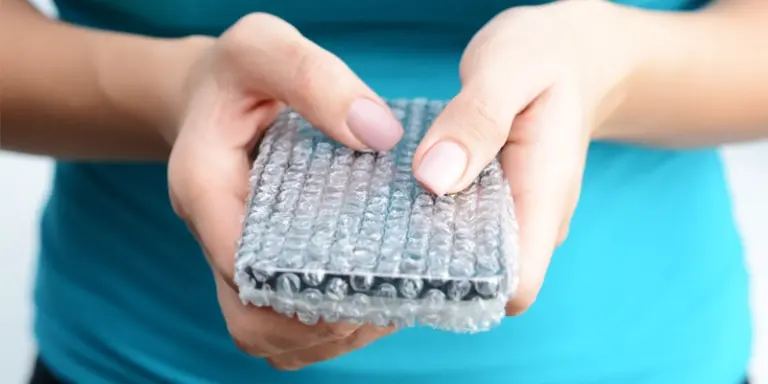
Choose a cover that fits the mattress without placing excessive pressure on its structure. Check that the mattress is dry before wrapping it. Trapping moisture inside a plastic cover can create problems, particularly if the mattress will remain wrapped for an extended period. Where possible, use a clean cover designed for mattress transportation rather than relying on thin household plastic that can tear easily. For longer journeys, confirm that the cover remains intact and that the mattress is protected from water entering the vehicle.
5. Reinforce the Protection Around Corners and Edges
Even when a mattress is covered, its corners and edges can be vulnerable to damage during movement. This is particularly relevant when manoeuvring through staircases, doorways and vehicle openings. Consider using suitable additional protection, such as moving blankets or protective padding, around vulnerable areas. Secure the cover so it remains in place without compressing the mattress excessively. Avoid using tape directly on the mattress fabric because adhesive may leave marks or damage the material. When moving the mattress, keep it away from sharp edges, exposed hardware, rough surfaces and objects that could pierce or tear the cover.
A little extra preparation can help preserve the mattress’s appearance and condition throughout transportation.
6. Lift, Position and Load the Mattress Carefully
Mattress handling requires planning because the item can be bulky even when it is not particularly heavy. Before lifting, agree on the route and movement with the other person helping you. Keep the pathway clear and make sure everyone understands when the mattress will be lifted, turned or lowered.
Where practical:
- Use two people for large or awkward mattresses.
- Keep the mattress under control rather than allowing it to swing.
- Avoid twisting your body while carrying a load.
- Use a suitable trolley or mechanical aid where appropriate.
- Avoid lifting beyond your physical capability.
- Stop and reassess if the route becomes unsafe.
Once the mattress reaches the vehicle, position it according to the manufacturer’s handling guidance and the available cargo space.
Do not assume every mattress can be folded, rolled or carried in the same position. Its construction determines how it should be handled.
If you are uncertain about the safest way to lift or position a heavy mattress, seek assistance rather than risking an injury or damaging the item.
7. Secure the Mattress Before You Transport It
Loading the mattress is only part of the transportation process. It must also remain stable while the vehicle is moving. An unsecured mattress can slide, bend, rub against other items or become damaged during braking and turning. Use appropriate cargo restraints and suitable anchor points to prevent movement. Restraints should be tightened enough to hold the mattress securely without putting excessive pressure on it.
When loading a mattress with other household items:
- Keep it away from sharp objects.
- Avoid placing unstable items against it.
- Keep heavy objects from pressing against its surface.
- Use appropriate padding between furniture items.
- Ensure the load does not obstruct the driver’s view.
- Check that the vehicle’s doors can close and latch securely.
Do not rely on the mattress’s weight alone to keep it in position. After loading, inspect the arrangement to ensure everything is stable before departing. For longer journeys, follow appropriate vehicle and cargo safety procedures.
8. Avoid Placing Heavy Items on the Mattress
When moving an entire household, it can be tempting to use the mattress as extra space for other furniture or boxes. However, placing heavy objects on top of a mattress can damage its internal structure or create permanent indentations. Items with sharp corners can also puncture the protective cover and tear the mattress fabric.
Whenever possible, transport the mattress in a position recommended by its manufacturer and keep heavy furniture, appliances and boxes from resting on it.
If you need to transport multiple furniture items together, plan how each item will be positioned before loading begins.
Proper loading can help protect both the mattress and the other items being transported.
9. Check the Mattress Type and Manufacturer’s Instructions
Not all mattresses have the same internal construction.
Memory foam, latex, innerspring and hybrid mattresses can respond differently to bending, rolling, compression and changes in position.
Memory foam mattresses
Memory foam mattresses may be flexible, but this does not mean every model can be folded or rolled safely.
Some products are supplied compressed or have specific instructions for rolling. Others are designed to remain flat and may be damaged if bent incorrectly.
Always check the manufacturer’s instructions before changing the mattress’s shape.
Innerspring mattresses
Innerspring mattresses contain a coil system that can be damaged by excessive bending or compression.
Unless the manufacturer specifically permits it, avoid folding or forcing this type of mattress into a restricted space.
Hybrid mattresses
Hybrid mattresses combine different materials, which may include foam and metal coils. Their handling requirements depend on the particular construction.
Do not assume that a hybrid mattress can be folded simply because some of its foam layers are flexible.
Latex and speciality mattresses
Latex and other speciality mattresses may also have specific handling requirements. Follow the instructions supplied with the product, particularly for expensive or ergonomically designed models.
The safest approach is to follow the manufacturer’s guidance rather than relying on a general rule for all mattresses.
4 Mistakes to Avoid When You Transport a Mattress
Even with careful planning, a few common mistakes can lead to unnecessary damage or delays.
1. Moving the Mattress Without a Cover
An uncovered mattress can collect dust, dirt and moisture while being carried or transported. It may also rub against vehicle surfaces, walls and other furniture.
Use a suitable protective cover before moving the mattress through the property or loading it into the vehicle.
2. Forcing the Mattress Through Narrow Spaces
Trying to push a mattress through a doorway that is too small can damage its corners, seams or internal structure.
It can also increase the risk of injury when people attempt awkward lifting positions.
Measure the route beforehand. If the mattress does not fit comfortably, reconsider the angle, route or handling method rather than forcing it through.
3. Failing to Secure the Load
A mattress that moves around inside a vehicle can be damaged by repeated rubbing, shifting or contact with other items.
Use appropriate cargo restraints and position the mattress so that it remains stable during transportation.
Always check the complete load before driving.
4. Ignoring Manufacturer Instructions
Incorrect folding, rolling or compression can damage certain mattress types. This can be particularly problematic with innerspring, hybrid and speciality mattresses.
Check the manufacturer’s instructions before moving the product, especially when transporting it over a long distance.
How to Transport a Mattress When Moving Interstate
Moving interstate introduces additional considerations because the mattress may spend more time inside a vehicle and experience more road movement.
Before departure, make sure the mattress is completely dry, appropriately wrapped and protected from other cargo.
For a longer journey:
- Choose a covered vehicle with sufficient space.
- Secure the mattress against shifting.
- Keep heavy or sharp objects away from it.
- Protect it from potential water exposure.
- Check the load arrangement before travelling.
- Follow the manufacturer’s positioning requirements.
- Inspect the mattress after arrival.
A longer journey also makes good loading practices more important because the mattress may be exposed to repeated vehicle movement for several hours.
If you are coordinating multiple household items, a professional moving or transportation service may help simplify vehicle selection, loading and overall move planning.
Should You Hire Professional Movers to Transport a Mattress?
Moving a mattress yourself may be practical if you have a suitable vehicle, enough assistance and an uncomplicated route.
However, professional moving assistance can be worthwhile when you are transporting a large mattress, managing multiple furniture items, navigating stairs or moving over a longer distance.
Professional movers can help with planning the move, handling bulky items and arranging suitable transportation.
Before booking a service, explain the mattress size, pickup and delivery locations, access conditions and any special handling requirements.
You should also ask what protective materials and handling assistance are included rather than assuming every provider offers the same service.
For customers already organising a broader household move, combining mattress transportation with the rest of the furniture can make the moving process easier to coordinate.
How to Transport a Mattress More Efficiently
A smooth mattress move starts before the vehicle arrives.
Use this checklist to keep the process organised:
Before moving day
- Measure the mattress and access points.
- Check the manufacturer’s handling instructions.
- Arrange sufficient help.
- Choose a suitable covered vehicle.
- Obtain an appropriate mattress cover.
During loading
- Keep the route clear.
- Handle the mattress carefully.
- Protect corners and edges.
- Position the mattress appropriately.
- Secure the load before departure.
After delivery
- Unload carefully.
- Remove the cover when the mattress is in a clean, dry area.
- Inspect for any signs of damage.
- Allow the mattress to air out if needed and follow the manufacturer’s care guidance.
Keeping these steps in mind can reduce last-minute problems and help protect your mattress throughout the journey.
How Moving With Sam Can Help With Furniture Transportation
Moving a mattress can be one part of a larger furniture move. Coordinating the mattress, bed frame, other furniture and household belongings can require careful planning and suitable transportation.
Moving With Sam provides moving and furniture delivery services, helping customers transport furniture and bulky items between locations.
When arranging transportation, provide accurate details about your mattress size, pickup and delivery locations, stairs or lift access, and any other furniture being moved. This helps the team assess your requirements and discuss an appropriate service.
For customers moving multiple furniture items, planning the collection and delivery together can make the overall process easier to manage.
Explore Moving With Sam’s furniture delivery services or visit our website to learn more about our services.
Final Thoughts
Transporting a mattress safely requires more than simply carrying it to a vehicle.
The mattress needs to be prepared, protected, moved using suitable handling methods and secured properly for the journey. Its dimensions, construction and manufacturer’s instructions should guide how it is positioned and transported.
By measuring access points, clearing the route, using a protective cover, arranging adequate help and securing the load, you can reduce the risk of unnecessary damage.
For large mattresses, difficult access or moves involving several bulky items, professional assistance may also be worth considering.
Planning ahead helps protect your mattress and makes moving day easier to manage.
Need Help With Mattress or Furniture Transportation?
Moving With Sam provides moving and furniture delivery services for customers who need help transporting furniture and bulky items.
If you’re planning a move, discuss your mattress size, access requirements and other furniture transportation needs with our team.
Let Moving With Sam help you plan your next move.
📞 1800 899 726
🌐 movingwithsam.com.au
📩 info@movingwithsam.com.au
Frequently Asked Questions
1. What is the safest way to transport a mattress?
Remove all bedding, check the manufacturer’s handling instructions, cover the mattress with a suitable protective bag, use enough assistance to carry it safely and secure it inside a suitable vehicle. Keep it away from sharp or heavy objects during transport.
2. Can I transport a mattress in a car?
Some smaller mattresses may fit in a suitable vehicle, but many queen and king mattresses will not fit safely inside a standard car. Measure the cargo area and openings before arranging transportation. A suitable van, enclosed truck or trailer may be more appropriate.
3. How do you transport a king-size mattress?
A king-size mattress generally requires more space and assistance than a smaller mattress. Measure the access route, use a suitable protective cover and arrange enough help to control the mattress safely. Check the manufacturer’s instructions before changing its position or shape.
4. Can you fold a mattress for transportation?
Only fold or roll a mattress if the manufacturer specifically allows it. Some mattresses are designed to be flexible, while others may suffer damage when bent or compressed. Innerspring and hybrid models should not be folded unless their manufacturer permits it.
5. How do I protect a mattress from rain and dust during a move?
Use a properly fitted mattress bag or protective cover, and transport it in a suitable covered vehicle where possible. Make sure the mattress is dry before wrapping it and avoid trapping moisture inside the packaging for extended periods.
6. How should a mattress be secured inside a moving truck?
Position the mattress according to the manufacturer’s instructions and secure it with appropriate cargo restraints attached to suitable anchor points. Prevent it from sliding or rubbing against other items, and avoid excessive pressure that could deform the mattress.
7. Should I transport a mattress flat or upright?
Follow the manufacturer’s recommended transportation position. If upright transportation is permitted, ensure the mattress is properly supported and secured. Do not assume that every mattress can safely be transported in the same position.
8. Can I put furniture or boxes on top of a mattress?
It is generally best to avoid placing heavy or sharp-edged items on top of a mattress. They may damage the internal structure, create indentations or puncture the protective covering.
9. Is professional mattress transportation worth it?
Professional assistance may be useful if you have a large or heavy mattress, difficult access, no suitable vehicle or several furniture items to transport. Compare the service requirements, handling arrangements and total cost before booking.
10. Can Moving With Sam help transport a mattress?
Moving With Sam provides moving and furniture delivery services. Contact the team to discuss your mattress size, pickup and delivery locations, access conditions and transportation requirements. The available service will depend on the details of your move.