
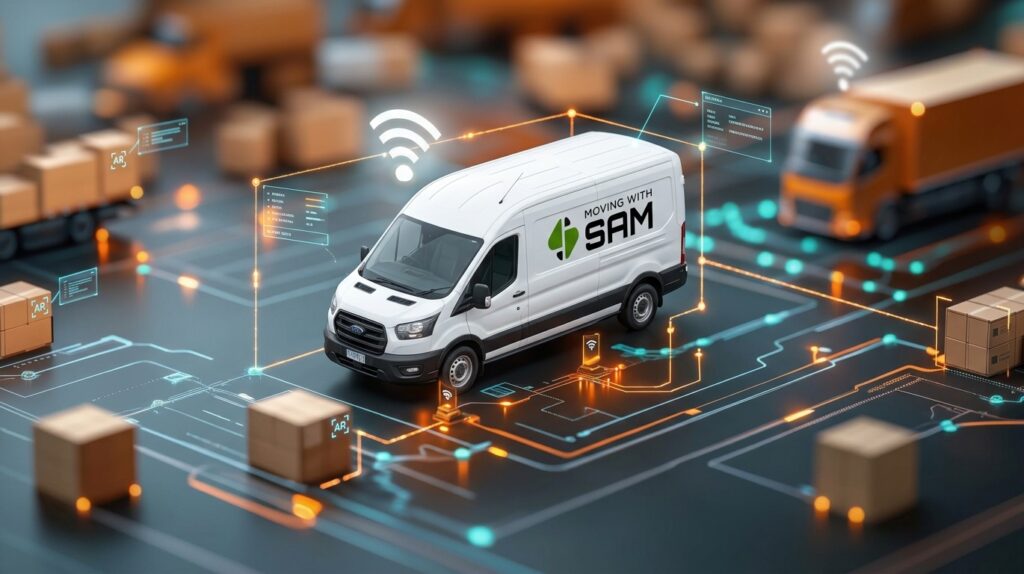
Modern logistics depends on more than moving products from one location to another. Businesses also need visibility into where their goods are, when deliveries are expected and whether shipments are progressing as planned.
For retailers, furniture brands, eCommerce businesses and logistics providers, a lack of delivery visibility can create uncertainty. Teams may spend valuable time chasing updates, customers may be left waiting, and unexpected delays can disrupt wider operations.
This is where real-time tracking in logistics becomes valuable.
Real-time tracking uses technologies such as GPS, digital scanning and connected systems to provide information about the location or status of vehicles, shipments and goods. Depending on the technology, updates may be continuous or triggered when a shipment reaches a particular checkpoint.
These insights can help businesses coordinate deliveries, respond to delays and communicate more effectively with customers.
For Australian businesses managing furniture, bulky products and recurring deliveries, logistics visibility is particularly important because delivery schedules, handling requirements and transportation distances can make coordination more complex.
In this guide, Moving With Sam explores how real-time tracking works, its key benefits, the technologies behind it and what businesses should consider when choosing a logistics partner.
What Is Real-Time Tracking in Logistics?
Real-time tracking in logistics refers to the use of technology to monitor and communicate information about the location, movement or status of goods and transportation assets as a shipment progresses through the delivery process.
Depending on the system, businesses may be able to see:
- The current or last reported vehicle location
- Shipment collection and dispatch status
- Checkpoint or warehouse scan events
- Estimated delivery times
- Delivery progress
- Route information
- Delays or exceptions
- Proof of delivery, where available
The level of visibility depends on the provider’s technology, the tracking equipment being used and how frequently information is updated.
For example, GPS-based fleet tracking can provide location updates for a vehicle, while barcode scanning may record that a parcel has been collected, processed at a facility or delivered.
Although both systems improve visibility, they do not provide exactly the same information.
Real-time tracking vs. traditional shipment tracking
Traditional tracking may rely on status updates generated at important stages of a shipment’s journey. Real-time tracking can provide more frequent location or movement information, especially when GPS-enabled vehicles and connected systems are used.
| Feature | Traditional tracking | Real-time tracking |
|---|---|---|
| Location information | Often based on recorded checkpoints | May provide frequent or near-live vehicle locations |
| Shipment updates | Usually generated at key events | Can include ongoing movement and status updates |
| Delivery estimates | May be based on service schedules | Can be updated using current operational information |
| Delay visibility | Often becomes clear after a status event | May help identify potential delays sooner |
| Operational use | Shipment status and confirmation | Delivery coordination, fleet visibility and exception management |
The distinction is not absolute. Modern tracking systems often combine checkpoint scans, vehicle location data and estimated delivery information.
How Does Real-Time Logistics Tracking Work?
Real-time tracking can combine several technologies to collect, transmit and display information about shipments and transportation operations.
1. GPS Real-Time Tracking
Global Positioning System (GPS) technology helps determine the location of compatible vehicles and devices.
In logistics, GPS tracking can help fleet managers monitor vehicle movements, review routes and identify where vehicles are during a delivery run.
For example, a business managing furniture deliveries across Melbourne may use fleet tracking to understand vehicle locations and coordinate operational changes when required.
GPS location data does not automatically guarantee an accurate delivery time. Traffic, unloading requirements, customer availability and other factors can still affect the final arrival.
2. Barcode and QR Code Scanning
Barcode and QR code systems record shipment information when an item is scanned.
A scan may be recorded when goods are collected, received into a warehouse, prepared for dispatch or delivered to their destination.
These event-based updates create a digital record of the shipment’s progress and can help businesses investigate missing updates or fulfilment issues.
3. RFID Technology
Radio Frequency Identification (RFID) uses radio waves to identify tagged products or assets through compatible readers.
In suitable warehouse and logistics environments, RFID can help record inventory movement and identify items passing through particular points.
Unlike GPS, RFID does not independently provide continuous location tracking across an entire road journey. Its usefulness depends on the tags, readers and infrastructure available.
4. Connected Devices and Telematics
Telematics systems can combine vehicle location, movement and operational data. Other connected devices can provide information about specific conditions, depending on their sensors and configuration.
For example, temperature sensors may be used in cold-chain logistics to monitor conditions for temperature-sensitive goods.
For furniture delivery, the main priorities are more likely to involve vehicle location, delivery progress, scheduling and handling coordination.
5. Logistics Software and Integrated Systems
Tracking information becomes more useful when it can be accessed by the people responsible for transportation, warehouse operations and customer communication.
Logistics software may combine delivery bookings, shipment events, vehicle information and proof-of-delivery records in one system.
The objective is to give relevant teams a clearer view of delivery operations without requiring them to chase multiple sources for basic information.
8 Benefits of Real-Time Tracking in Modern Logistics
1. Greater Supply Chain Visibility
Supply chain visibility helps businesses understand where goods are and what is happening during their movement through the logistics process.
Without suitable tracking, a business may need to contact warehouse staff, drivers or delivery providers to obtain updates.
A tracking system can make relevant information easier to access, helping teams identify shipment status and investigate exceptions.
For furniture brands and retailers, this visibility can support better coordination between inventory preparation, dispatch and final delivery.
2. Better Delivery Planning and Route Management
Tracking information can help logistics teams understand vehicle movements and respond when conditions change.
When combined with route-planning software and traffic information, vehicle location data can support decisions about delivery sequencing, route changes and operational scheduling.
Potential benefits include:
- Better awareness of vehicle movements
- More informed delivery planning
- Faster response to route disruptions
- Improved coordination between drivers and dispatch teams
- Better understanding of delivery performance
Tracking alone does not optimise a route. The benefits depend on how the information is used and whether the business has appropriate planning tools and processes.
3. Improved Delivery ETA Communication
An estimated time of arrival (ETA) helps customers understand when to expect a delivery.
Accurate, regularly updated delivery estimates can help reduce uncertainty and make it easier for customers to plan around an appointment.
This is particularly important for furniture and bulky-item deliveries, where recipients may need to arrange access, be present at the delivery location or coordinate with building management.
Businesses should ensure that ETAs are presented as estimates rather than guarantees unless a specific service commitment applies.
When delays occur, timely communication helps customers understand what has changed and what to expect next.
4. More Efficient Fleet Management
Fleet tracking can give operations teams greater visibility into vehicle locations and movement patterns.
Over time, suitable data can help businesses review:
- Route performance
- Vehicle utilisation
- Travel time
- Frequent delays
- Unnecessary kilometres
- Scheduling efficiency
- Patterns affecting delivery productivity
These insights can inform operational improvements when combined with realistic delivery schedules, suitable vehicles and trained staff.
For logistics businesses operating across Australian cities, reviewing fleet performance can be useful for understanding how travel distances, traffic and delivery locations affect daily operations.
5. Faster Identification of Delays and Exceptions
A delayed delivery can affect warehouse schedules, customers and subsequent stops on a delivery route.
Tracking systems can help identify missed checkpoints, unexpected changes or vehicles that are not progressing as planned.
Depending on the system, alerts may notify the relevant team when an event requires attention.
This allows staff to investigate the issue and communicate with the customer or adjust the plan where possible.
Tracking cannot prevent every disruption, but it can help businesses recognise problems earlier and respond more effectively.
6. Better Accountability and Shipment Security
Digital tracking records can help establish where a shipment was recorded at a particular stage of its journey.
Combined with scan records and proof of delivery, they can support investigations into missing items, incorrect deliveries and handling disputes.
For businesses transporting valuable or bulky products, these records can help improve operational accountability.
However, tracking does not eliminate the risk of theft, loss or damage. Businesses still need appropriate security procedures, careful handling, access controls and clear responsibilities.
7. Improved Customer Experience
Customers want clear information about their orders.
Uncertainty about delivery progress can lead to follow-up calls, repeated enquiries and frustration, particularly when customers need to organise their day around a delivery.
Suitable tracking and communication processes can help customers understand:
- Whether an order has been dispatched
- Whether delivery is progressing
- When the delivery is expected
- Whether a delay has occurred
- Whether delivery has been completed
For furniture retailers and eCommerce brands, delivery communication is an important part of the customer experience.
A good product experience should extend beyond the checkout and continue through the final delivery.
8. More Informed Business Decisions
Tracking data can become a useful operational resource when businesses review it over time.
For example, recurring delivery delays may indicate that certain routes need more time, particular locations create access problems or delivery schedules require adjustment.
Businesses can use suitable historical information to assess:
- On-time delivery performance
- Average delivery duration
- Missed delivery patterns
- Route efficiency
- Customer-reported issues
- Delivery exceptions
- Vehicle utilisation
The value comes from turning operational information into specific improvements rather than simply collecting data.
The Role of Real-Time Tracking in Furniture Logistics
Furniture logistics presents challenges that are different from standard parcel delivery.
Items such as sofas, mattresses, dining tables, beds and cabinets may require larger vehicles, careful loading, extra handling and coordination with the recipient.
Tracking and delivery visibility can help businesses coordinate the different stages of this process.
For example, a furniture retailer may need to know whether products have been prepared for dispatch, whether the delivery vehicle is progressing along its route and whether the delivery has been completed.
This information can help warehouse teams, delivery coordinators and customer service staff work from a more consistent view of the operation.
Useful visibility processes for furniture logistics may include:
- Digital dispatch records
- Delivery status updates
- Driver and vehicle coordination
- Customer ETA communication
- Proof-of-delivery records
- Exception and damage reporting
- Communication between warehouse and delivery teams
For bulky-item deliveries, these processes should be supported by appropriate vehicles, handling equipment and clear delivery procedures.
Real-Time Tracking in 3PL and Last-Mile Delivery
Third-party logistics (3PL) providers manage selected logistics activities for other businesses. Depending on the service arrangement, these activities may include warehousing, inventory management, transportation and distribution.
Tracking can help connect these functions by providing information about stock movement, dispatch events and delivery progress.
Real-time tracking across 3PL operations
In a 3PL arrangement, useful visibility may include:
Warehouse: Recording goods received and inventory movements.
Dispatch: Confirming which products have been prepared and loaded.
Transportation: Monitoring vehicle location or shipment progress, where supported.
Last mile: Communicating delivery status and expected arrival.
Completion: Recording delivery confirmation or proof of delivery.
The exact capabilities depend on the systems used by the provider and the scope of the agreement.
For a business outsourcing logistics, it is important to confirm what information will be available, how frequently it is updated and who will have access to it.
Why real-time tracking matters in the last mile
Last-mile delivery is the final stage of the journey from a warehouse or distribution point to the customer.
It is often the stage most visible to the recipient, making communication and scheduling particularly important.
For furniture brands and retailers, a well-managed final delivery can help reduce uncertainty and provide a more organised experience for the customer.
How to Choose a Logistics Provider with Real-Time Tracking
Not every business needs the same level of tracking technology.
A company sending occasional parcels may only need basic shipment updates, while a retailer managing frequent furniture deliveries may require more detailed coordination.
When assessing a logistics partner, consider the following questions.
Real-time tracking and shipment visibility
Can you see shipment progress, or are updates provided only when you request them?
Update frequency
Are updates continuous, location-based or recorded only when important shipment events occur?
Delivery estimates
Does the provider offer ETAs? If so, how are they calculated and updated?
Proof of delivery
Can the provider record successful delivery through a scan, signature, photograph or another appropriate method?
Exception management
How are delays, failed delivery attempts, damaged goods and other issues reported?
Communication
Who will contact your business when something changes, and what information will be provided?
Reporting
Can the provider supply useful delivery or operational reports if your business needs them?
Privacy and access
Are shipment details and location information shared only with appropriate people?
The best system is one that provides the level of visibility your business needs and helps your team take practical action.
How Moving With Sam Supports Business Deliveries
Moving With Sam provides furniture delivery and logistics services for businesses, retailers and other customers that need products moved safely and efficiently.
Its service offering includes furniture delivery, bulky-item handling, business deliveries and 3PL support involving warehousing, inventory tracking and transportation.
For businesses selecting a logistics partner, it is worth discussing how delivery scheduling, status updates, customer communication and delivery confirmation will be managed for their particular requirements.
These arrangements are especially relevant for furniture brands and retailers, where a delivery may involve large products, access considerations and coordination with the recipient.
Explore Moving With Sam’s furniture delivery services or visit the Moving With Sam website to learn more about its services.
Final Thoughts
Real-time tracking has become an important part of modern logistics because it helps businesses understand shipment progress, coordinate deliveries and communicate more effectively.
When supported by suitable systems and operational processes, tracking can improve supply chain visibility, assist fleet management, highlight delays and provide useful records of delivery activity.
For Australian businesses, the right approach depends on product type, transport requirements, customer expectations and the level of visibility needed.
For furniture retailers, eCommerce brands and businesses handling bulky products, tracking should be considered alongside careful handling, reliable transportation, realistic scheduling and clear customer communication.
Better visibility helps businesses make better-informed logistics decisions.
Moving With Sam supports businesses with furniture delivery and logistics solutions designed around the practical requirements of moving products from collection to their final destination.
Ready to Improve Your Delivery Operations?
Choosing the right logistics partner involves more than moving products. It means finding a service that fits your business, communicates clearly and understands your delivery requirements.
Talk to Moving With Sam about your furniture delivery, business logistics and 3PL requirements.
📞 1800 899 726
🌐 movingwithsam.com.au
📩 info@movingwithsam.com.au
Frequently Asked Questions
What is real-time tracking in logistics?
Real-time tracking in logistics uses technologies such as GPS, connected devices and digital tracking systems to provide information about shipment locations or status as goods move through the supply chain. The update frequency depends on the system.
Why is shipment tracking important?
Shipment tracking helps businesses understand delivery progress, coordinate operations, investigate delays and provide better information to customers.
How does GPS tracking help logistics companies?
GPS tracking provides location information for compatible vehicles or devices. Logistics teams can use it to review vehicle movements, coordinate deliveries and support route planning.
What is the difference between shipment tracking and fleet tracking?
Shipment tracking focuses on an individual consignment or order and its progress. Fleet tracking focuses on vehicles and their movements. Businesses may use both to improve delivery visibility.
Can real-time tracking improve last-mile delivery?
Tracking can help teams monitor vehicle progress, review delivery estimates and respond to delays. Its effectiveness depends on the available technology and how well the business uses the information.
Does real-time tracking prevent lost or damaged goods?
Tracking can improve visibility and help investigate missing shipments or unexpected movements, but it cannot eliminate theft, loss or damage. Appropriate security and handling procedures remain essential.
How does tracking help furniture delivery businesses?
Tracking and delivery status records can help coordinate dispatch, vehicles, recipients and delivery completion. This can be particularly useful when transporting bulky products that require careful handling and planned access.
What should businesses look for in a logistics tracking system?
Businesses should consider update frequency, shipment visibility, ETA accuracy, proof of delivery, exception reporting, communication, reporting capabilities and privacy controls.
Does Moving With Sam offer real-time GPS tracking?
Available tracking features can vary by service and arrangement. Businesses should contact Moving With Sam to confirm the delivery updates, scheduling information and proof-of-delivery options available for their requirements.